Road checkpoints were set up around Cambodia’s southwestern province of Koh Kong as scam workers scattered from the massive Dara Sakor development.
Taxi drivers said they were afraid of being fined for transporting the foreign workers, who have been forced out of Cambodia’s widespread global scam centers amid rare pressure on the criminal operations. Koh Kong locals said they had seen the workers walking dozens of kilometers to the nearest city, sheltered along streams, and hiding in cowsheds.
However, the province has two main areas of alleged scam compounds: Dara Sakor, a huge land concession covering 20% of the country’s coast, handed to Chinese company Union Development Group in 2008 and sanctioned by the U.S. in 2020; and extensive developments about 90 km further north near the Thai border — buildings adjacent to the Koh Kong Resort casino, a property tied to U.S.-sanctioned tycoon Ly Yong Phat.
Dara Sakor late last month showed the common signs of emptying buildings and departing foreign workers, which have been proceeding in phases over the past several weeks — although there was still some ongoing construction.
But only one corner of the buildings in the vicinity of Koh Kong Resort appeared to have been emptied out as of January 25.
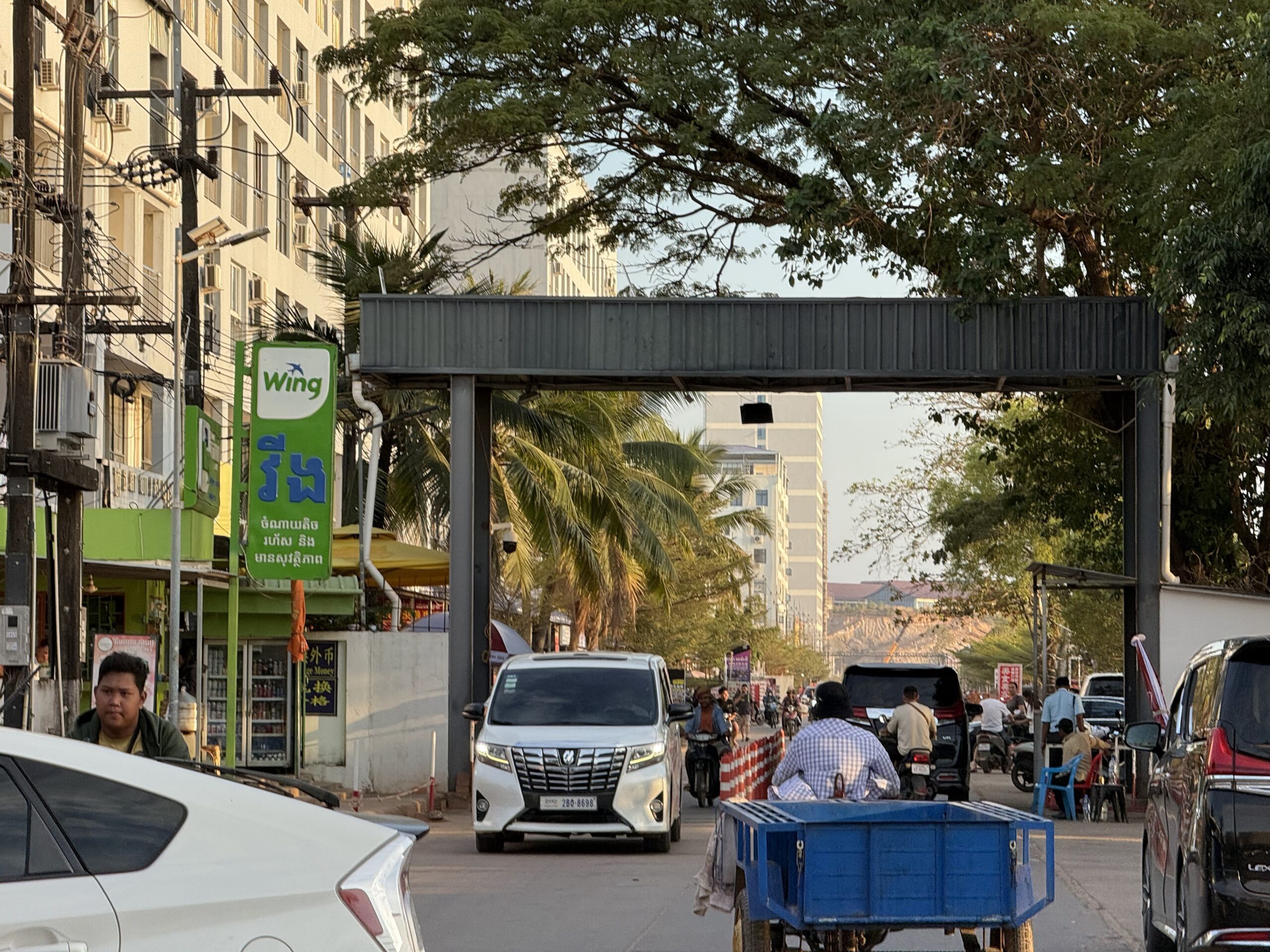
A gate leading to about a dozen buildings in the area was busy with traffic. Many motorbikes and luxury cars were seen passing through with inspections from security guards, while a few tuk-tuk drivers parked in front of the gate waiting to catch clients. One driver said some foreign workers had moved out, but he believed others were still there, including construction workers.
Clothes could be seen hanging in the windows of several buildings.

Last year, Amnesty International reported that it considers the group of buildings “to be or have been scamming compounds,” citing a New York Times article about a 23-year-old Vietnamese man who escaped. The 2023 Times article cited a Koh Kong deputy governor as saying 17 foreign nationals had been rescued from compounds belonging to Ly Yong Phat or the LYP Group.
A woman who answered the phone for Koh Kong Resort denied that nearby compounds were part of the resort, and said any foreign workers at the property were properly documented. Ly Yong Phat could not be reached for comment.
Commune police and officers stationed at a police booth in the Cham Yeam area declined to comment. Koh Kong provincial spokesperson Chhit Ratanak also declined to comment, saying he had not received any reports related to raids on online operations.
Thailand issued an arrest warrant for Ly Yong Phat last year for alleged money laundering and online scams.
The southern end of the area was quiet, similar to other compounds across Cambodia that have faced scam raids in recent weeks. A 20-year-old man was taking out trash from a Chinese food supplier, saying the area had housed Chinese, Vietnamese, Laotian and Myanmar workers. Previously, his employers made 50 kg of each dish a day, but now they only cooked only 10 kg. He expected to be laid off in the coming days.
A family with two small children were collecting scraps, while a three-wheel motorbike picked up a wooden table, chairs and a metal bed. A woman drove with a mattress on the back of her motorbike. A truck carried stacks of mattresses. A few people were also taking away equipment from the casino building.
About 10 tuk-tuk drivers sat around, saying they had no customers anymore.
Dara Sakor
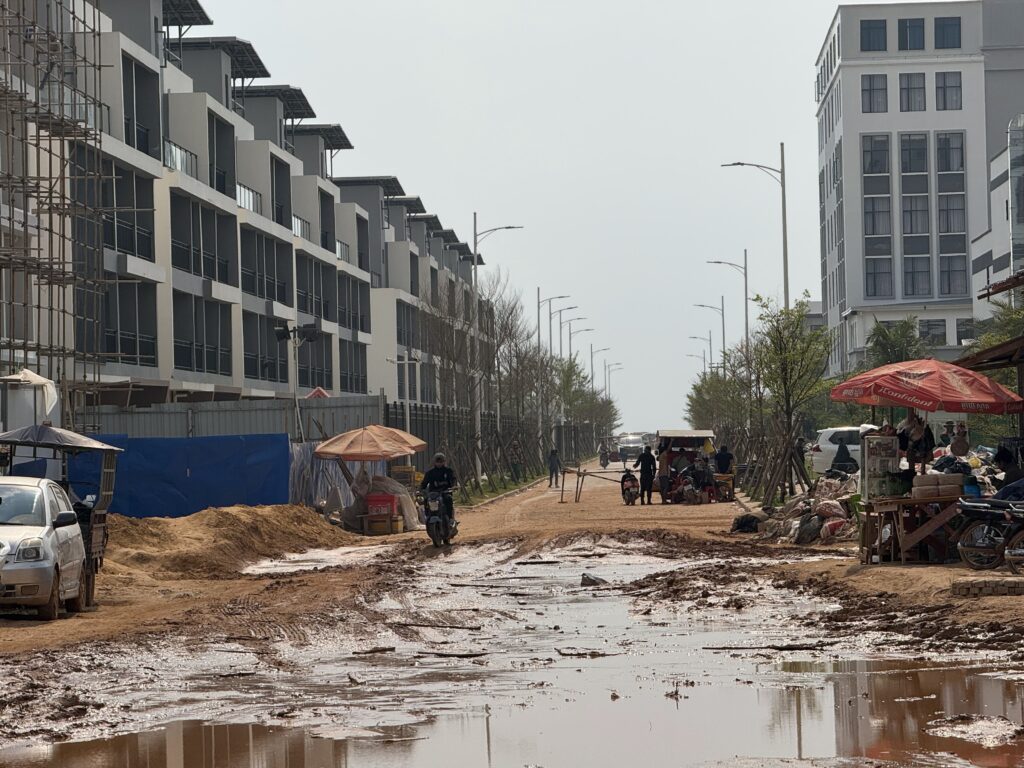
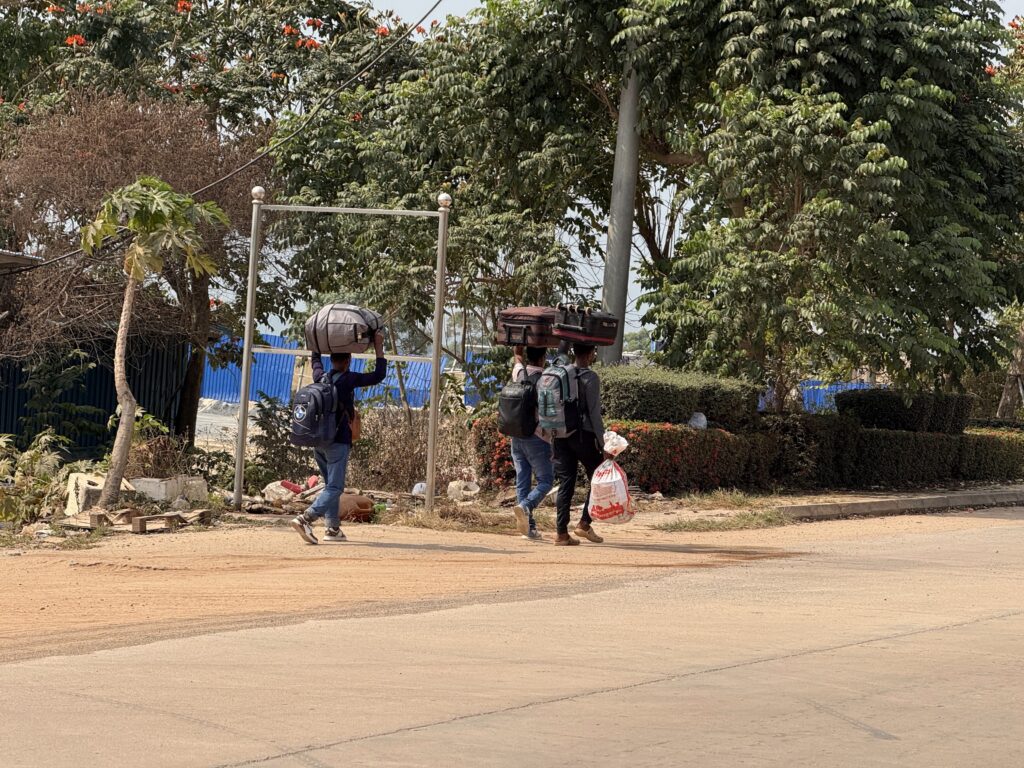
About 90 km south in Dara Sakor, rows of buildings were being emptied out. The Long Bay Dara Sakor condominium complex had no security guards at its gates, but there were two gray sofas with three black plastic bags on the top and a washing machine. Two women stood with a trolley with luggage while holding oversized stuffed animals and large bags. They appeared to be waiting for a friend to come out of the building. They were among hundreds of people who worked inside and had been laid off.
The Long Bay developments have previously been linked to scam operations as well as Cambodian Yim Leak via the companies ZhengHeng and BIC Bank. Yim Leak has been targeted by Thai authorities for alleged links to scam operations.
Yang Channy, Peam Kay village chief in Kiri Sakor district’s Koh Sdach commune, said hundreds had left the “online” buildings, a huge exodus with foreigners scattering in every direction.
“There have been so many people and we have not counted them,” he said.
“Some stay in people’s farms, some stay off the road, some stay in the forest and anywhere that they can hide themselves, some stay in people’s houses, and walk in wandering all over the place. … We just keep our eyes on them to check whether something could happen and they could cause violence or commit any robbery.”
Some had hidden themselves in livestock sheds for cows and pigs. One Chinese man was found severely bitten by the mosquitos and had to be taken away.
Neighboring Prek Smach village’s chief, Ching Vanna, said foreign workers were wandering in groups of five to 10.
“People who took their cows to feed in the rice fields, they found a group of them,” he said. “Villagers found a group of five to six Chinese people along the stream, and in the following days they went to check but did not find them. They used tents for shelter.”
One taxi driver said he found 100 foreign workers in his cowshed.
“In the morning when I walked to check my cows, I was surprised to find at least 100 Chinese hiding in my cowshed … because they are scared of police. We gave them some water and food, and they offered some money to my wife.”
He had heard of others taking shelter in residents’ houses, hiding in forests, and some walking from Dara Sakor to Sre Ambel — dozens of kilometers away.
“We feel a lot of sympathy for them … because some have nothing with them.”
Such reports have also been making rounds online. TikTok user Kim San said he had helped three Chinese nationals who had been without food for three days.
“I do not know how many Chinese people have faced such difficulties like these kids,” Kim San said in his video, which was watched around 2 million times.
One commenter said: “The Chinese people do not want to go back [to their embassy and to China] because when they go back, they will be imprisoned.”
Another added: “When you are near these Chinese people, you will feel pity for them. They have been sold from one place to another, and some have been tortured. Some have died and were thrown away like a dog.”
Another commenter said she was worried about new laws punishing people who sheltered foreigners without proper documents. “In my area there are many. Two people ran into my farm for help, and they knelt down and begged us. But how can we help them, because we do not understand them, and we can only bring food and water for them? They are very young.”
The scam operations that took root in Cambodia on the one hand victimized people all over the world with fake investments, long-term romance scams and callers pretending to be police — including Australian, Singaporean and the US’s Federal Bureau of Investigations. At the same time, foreign scam workers were in some cases trafficked, confined and even tortured and killed.
In front of a black building in Dara Sakor, around 40 people were waiting with suitcases for transportation. A few recyclers in the area said Cambodian security guards and cleaners had also lost their jobs, leaving many buildings empty.
“In the past the security guards would not allow us to drive inside like this, but now since there are very few guards, we can drive inside and scavenge the area — though it is very hard to find things because now because there are not many people like before.”
Koh Sdach commune police chief Chamroeun Chamrong said authorities had held 16 Chinese nationals for two days before putting them on a bus to the Chinese Embassy in Phnom Penh. Some foreigners had tried escaping to a local island by boat but were sent back, he said.
He added that locals were uncertain what to do when they encountered the wandering workers. “When they see white skin, they call them Chinese.”
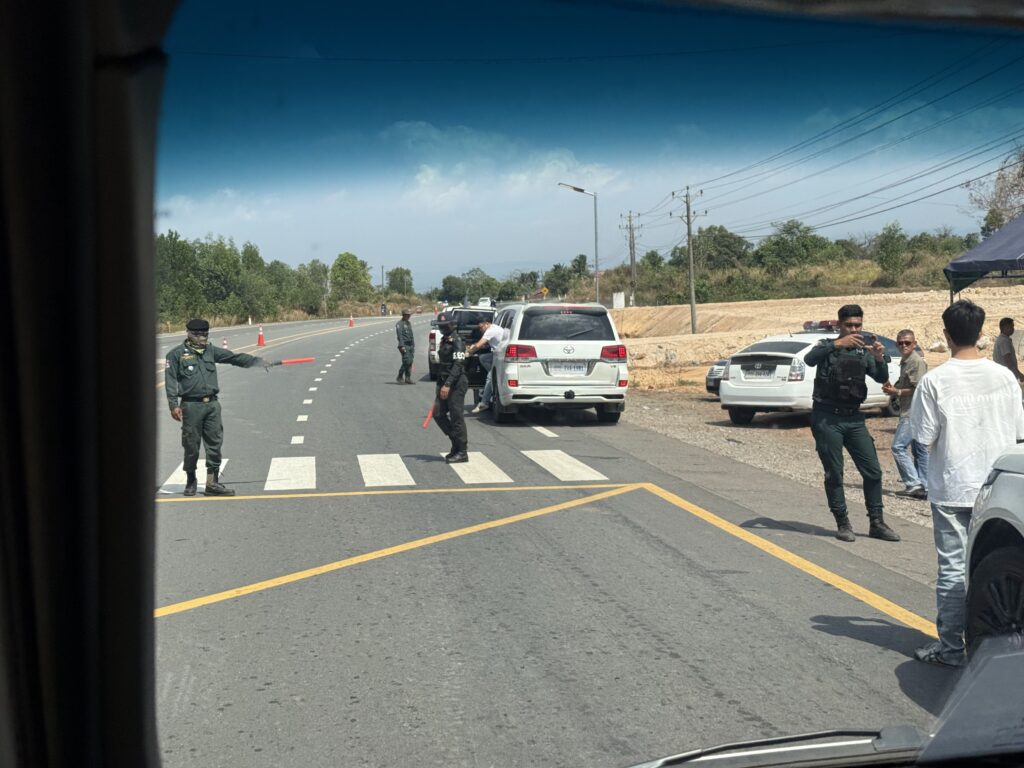
Checkpoints
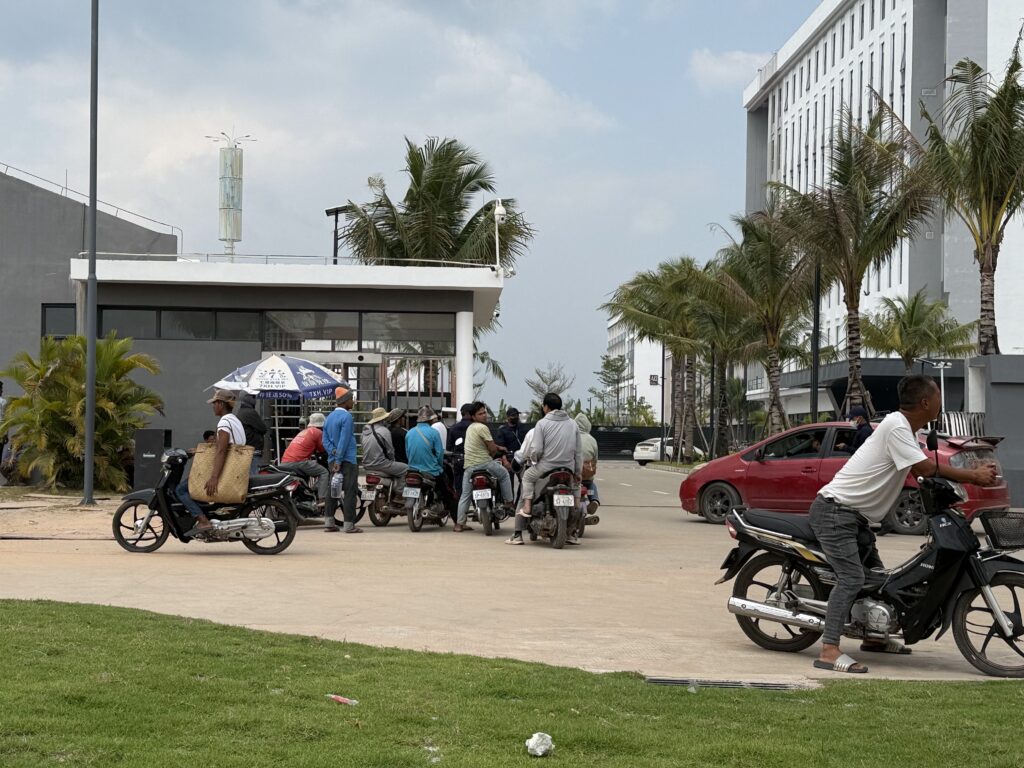
Taxi drivers around the Say Phouthang roundabout said most drivers had stopped transporting the foreign workers out of fear of arrest or fines. Police checkpoints checked passengers for passports, and if they didn’t have one, fines could be thousands of dollars, they claimed.
Smoking a Chinese cigarette, a Koh Kong immigration police officer at the roundabout was gossiping with the drivers that the police checkpoints were an “opportunity.”
Koh Kong provincial police said in a Facebook post on February 1 that all foreign travelers passing through the district must have a passport with them. But it denied it collects any money at the checkpoints, calling such reports “fake news.”
This came after former Information Minister Khieu Kanharith on January 31 had reposted a complaint about a driver being asked for money for having a Chinese passenger without a passport.
Kiri Sakor district police chief Prom Sovanny declined to comment.
This article is published as Creative Commons.